
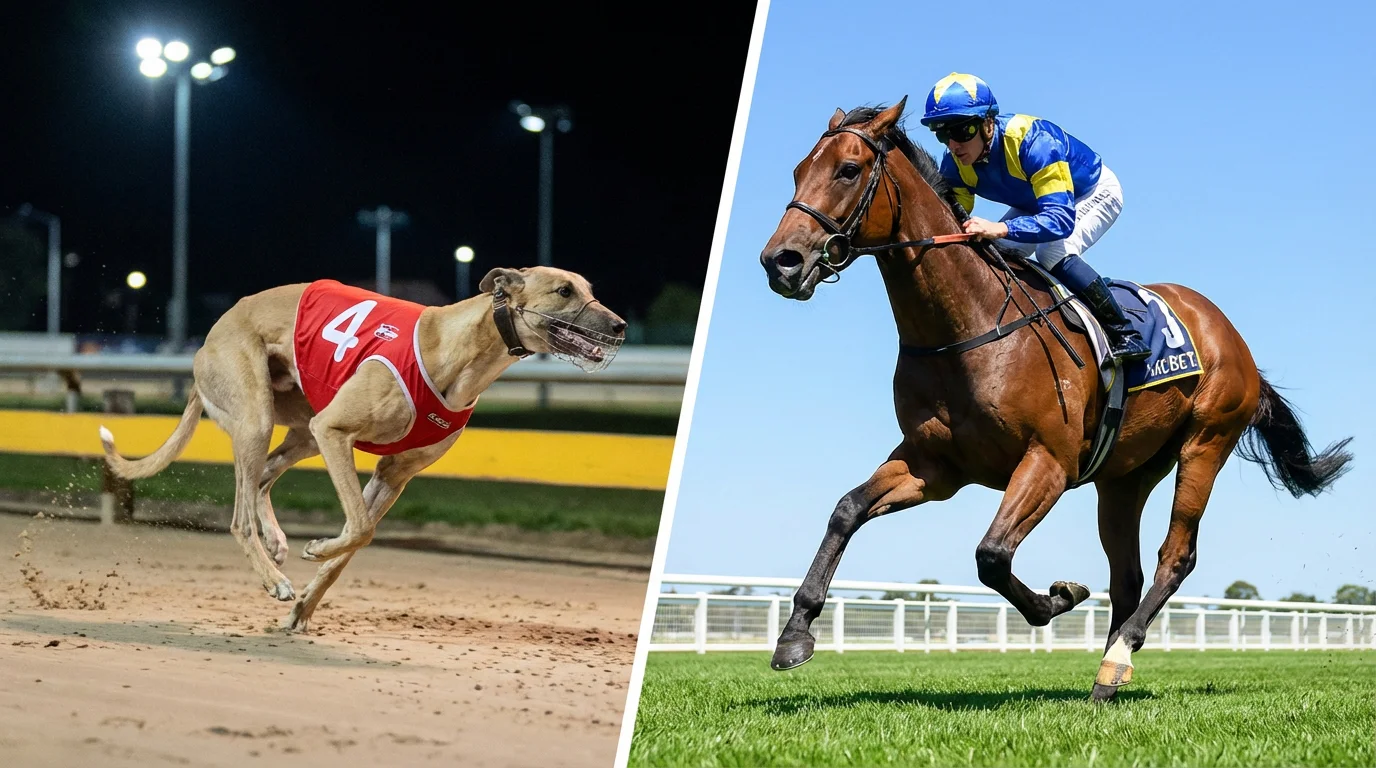
Same Betting Slip, Completely Different Sport
Horse racing and greyhound racing share a betting infrastructure — but very little else. The bet types are the same: win, each-way, forecast, tricast, accumulator. The bookmakers are the same. The betslip looks the same. And that’s roughly where the similarities end. The races themselves, the form analysis, the market dynamics, and the variables that determine outcomes are fundamentally different between the two sports, and punters who transition from horses to dogs without adjusting their approach are likely to struggle. Find more betting guides at greyhoundderbyodds.
If you’re a horse racing bettor looking at greyhound racing for the first time — perhaps drawn by the Derby or by the daily BAGS schedule — this guide covers what translates, what doesn’t, and where the greyhound-specific differences create opportunities that horse racing bettors are well placed to exploit.
Race Structure Differences
Six dogs, no jockeys, 30-second races. The variables are fewer but the margins are tighter. A standard greyhound race features six runners breaking from mechanical traps over a fixed distance on a sand track with four left-hand bends. There’s no riding, no tactical decisions mid-race, and no variation in pace strategy from the saddle. The dog runs its own race from trap to line, and the outcome is determined by speed, running style, trap draw, and how cleanly each dog negotiates the bends.
Horse racing fields can range from five to forty runners, over distances from five furlongs to four miles, on turf or all-weather surfaces, with or without obstacles. The jockey makes real-time tactical decisions — when to push, when to hold, where to position in the field — that directly influence the result. The pace of the race, the going, the draw, and the jockey’s skill all layer on top of the horse’s raw ability.
The consequence for bettors is that greyhound racing has fewer variables but less separating the runners. In a horse race, a clearly superior horse with a good jockey can dominate despite a poor draw. In a greyhound race, the trap draw and first-bend position can undo the best dog in the field. The reduced number of variables doesn’t make greyhound betting simpler — it makes each variable more decisive.
Race frequency is another structural difference. A BAGS meeting runs twelve or more races in an afternoon, each lasting around thirty seconds. A horse racing card might have seven or eight races across three hours. Greyhound racing offers more betting opportunities per hour than any other sport, which is both an advantage (more data, more chances to apply your edge) and a risk (more temptation to bet without adequate analysis).
How Odds and Markets Differ
Greyhound markets are thinner, odds are shorter, and the overround is typically higher. The fundamental difference in market structure between horse and greyhound racing is liquidity — the total amount of money flowing through the market on each race.
A major horse race — a Group 1 at Ascot or the Grand National — attracts millions of pounds in betting turnover. The Derby final at Towcester, the biggest greyhound race of the year, attracts a fraction of that. Standard BAGS meetings attract a smaller fraction still. Lower liquidity means the market is less efficient: prices are set by a smaller number of opinions, and individual bets can move the odds more significantly.
For bettors, this inefficiency cuts both ways. On one hand, pricing errors are more common and more persistent in greyhound markets — a dog at 8/1 that should be 5/1 might stay mispriced longer because fewer people are betting the race. On the other hand, the overround on greyhound races is typically higher than on equivalent horse races (115-125% versus 110-115% for major horse races), meaning the bookmaker’s margin is larger and the starting position for the bettor is worse.
The six-runner field in greyhound racing compresses the odds range. In a twenty-runner handicap horse race, prices might span from 3/1 to 66/1. In a greyhound race, the typical range is 6/4 to 10/1. This compressed range means that the difference between the favourite and the outsider in implied probability is much smaller in greyhound racing — every dog has a meaningful chance, and the market prices this accordingly.
Form Analysis — What Translates and What Doesn’t
Speed, consistency, and draw are universal. Jockey skill and going have no equivalent. Horse racing bettors who move to greyhounds will find that some of their analytical skills transfer directly, while others need to be replaced.
What translates: reading form figures, assessing recent results, evaluating the significance of a draw position, tracking trainer performance, and understanding how conditions affect the racing surface. These skills are portable because they rely on pattern recognition and data interpretation that apply equally to both sports. A horse racing bettor who tracks going preferences will naturally understand how wet and dry greyhound tracks affect different running styles.
What doesn’t translate: jockey assessment, pace analysis based on riding tactics, and the going system. In horse racing, the jockey is a critical variable — a good jockey on a moderate horse can outperform a moderate jockey on a good horse. Greyhounds have no equivalent. The dog’s performance is entirely its own, shaped by training, fitness, and the physical demands of the race. There’s no human decision-maker during the race to assess or second-guess.
Pace in horse racing is influenced by jockey tactics — hold up, make all, track the pace. In greyhound racing, pace is a function of each dog’s natural running style and its trap position. You can’t instruct a greyhound to sit behind the leader and kick at the two-furlong pole. What you can do is identify whether a dog’s natural running style — front-runner, mid-pack, or closer — suits its trap draw and the likely pace dynamics of the field. This is a different skill from horse racing pace analysis, but it’s learnable and equally important.
Sectional times are more straightforward in greyhound racing. With only two meaningful splits — trap-to-first-bend and first-bend-to-finish — the data is simpler to interpret than the multi-furlong sectionals available in horse racing. Horse racing bettors accustomed to working with Timeform or Racing Post speed figures will find the greyhound equivalent more accessible, if less granular.
Bet Types Unique to Greyhound Racing
Trap challenges and certain forecast markets are greyhound-specific. While the core bet types are identical — win, each-way, forecast, tricast — some market structures are unique to greyhound racing or operate differently from their horse racing equivalents.
The computer straight forecast (CSF) and computer tricast (CT) are calculated dividend-style payouts determined by a formula after the race, rather than fixed odds taken before the off. In horse racing, the CSF exists too, but in greyhound racing it’s more commonly used because the six-runner field makes forecast and tricast betting more accessible. With only thirty possible forecast combinations and a hundred and twenty possible tricast combinations in a six-dog race (versus hundreds or thousands in a large horse racing field), the odds of landing these bets are higher and the payouts are correspondingly lower but more frequent.
Trap-specific bets — such as betting on whether a particular trap number will win the race, regardless of which dog occupies it — are occasionally available in greyhound racing. These bets are based on track-specific trap statistics rather than individual dog form, and they appeal to punters who have identified a strong trap bias at a particular venue.
The Derby itself introduces market structures that don’t exist in standard horse racing: outright tournament winner markets that run across weeks, round-by-round qualification bets, and top-trainer markets. These resemble the ante-post structures of horse racing festivals (Cheltenham, Royal Ascot) but are applied to a knockout competition rather than a series of independent races.
Different Sport, Same Discipline
The transition from horse racing to greyhound betting is shorter than most expect. The analytical mindset is the same: assess the form, account for the conditions, evaluate the price, and manage the stake. The specific variables change — trap draw instead of draw at a flat track, running style instead of jockey preference, sand conditions instead of going — but the framework for converting data into a betting decision is directly transferable. Also read our Irish vs English greyhound Derby.
Where horse racing bettors often find an edge in greyhound racing is in market awareness. Horse racing markets are deeper and sharper, which means horse racing punters are accustomed to working within tighter margins. The greyhound market, with its wider price discrepancies and higher overrounds, offers more opportunities for bettors who bring that horse racing discipline — checking multiple bookmakers, understanding the overround, taking early prices with BOG — and apply it to a less scrutinised sport. The dogs are different. The discipline that makes money is the same.
