
What Makes the Greyhound Derby the Biggest Bet in Dog Racing
The Derby isn't one race — it's six rounds of elimination that reshape the betting market every week. While nightly graded meetings at Romford or Harlow offer punters a steady supply of six-dog sprints, the English Greyhound Derby operates on an entirely different scale: over 180 entries, whittled down across a month and a half of knockout heats, culminating in a single final worth £175,000 to the winning kennel. No other event in British dog racing generates this kind of ante-post activity, and no other event produces odds that move this dramatically from first entry to final trap rise.
What separates Derby betting from standard greyhound wagering is time. The ante-post market opens months before the first heat is run at Towcester Greyhound Stadium, and prices on individual dogs can swing from 100/1 to 5/2 as the tournament unfolds. Each qualifying round eliminates contenders, reshapes the field, and forces the market to reprice the survivors. For punters willing to do the homework, that extended timeline is the opportunity. For those who treat it like any other night at the track, it's a trap.
This guide covers every angle of Greyhound Derby odds and betting — from how the ante-post market works and which bet types apply, through form analysis and strategic approaches, to the tournament structure itself. Whether you're looking to place your first Derby wager or sharpen an existing approach, the objective is the same: understand the event deeply enough to identify value before the market corrects itself.
The 2026 English Greyhound Derby is scheduled for Towcester, with the final set for early June. The ante-post market is already live, and the dogs that will contest the opening heats are in active training. Everything that follows is built around that timeline.
English Greyhound Derby — Key Facts
- Prize money: £175,000 to the winner (total purse exceeding £350,000)
- Venue: Towcester Greyhound Stadium, Northamptonshire
- Distance: 500 metres (sand surface)
- Rounds: 6 qualifying rounds plus the final
- Field size: 180+ entries reduced to a 6-dog final
- First held: 1927
Greyhound Derby Odds — How the Market Moves
Ante-post odds on the Derby open months before a single heat is run. That's the defining feature of this market — and the reason it attracts a different class of punter to the one backing Trap 4 at Sunderland on a Wednesday evening. In a standard greyhound race, odds are compiled on the morning of the meeting, adjust in the final minutes before the off, and settle at starting price. The Derby operates more like a futures contract: prices are posted early, reassessed after each round, and traded over weeks rather than minutes.
The sheer number of initial entries — typically north of 180 — means that early ante-post books contain dogs priced anywhere from 6/1 to 500/1. That breadth is unusual in greyhound racing, where six-runner fields naturally produce compressed markets. In the Derby, the field starts wide open and narrows with every qualifying round, creating a price compression effect that punters can either exploit or get caught by.
To illustrate how a typical ante-post market might look before the opening heats, consider this hypothetical snapshot:
| Dog | Ante-Post Odds | Implied Probability |
|---|---|---|
| Dog A (previous Derby finalist) | 5/1 | 16.7% |
| Dog B (Irish Derby winner) | 8/1 | 11.1% |
| Dog C (open-class winner, strong trials) | 14/1 | 6.7% |
| Dog D (emerging talent, limited form) | 33/1 | 2.9% |
| Dog E (proven stayer, new to Towcester) | 50/1 | 2.0% |
| Dog F (outsider, first major event) | 100/1 | 1.0% |
These numbers shift constantly. By the semi-final stage, the same market will have contracted to six finalists at prices between Evens and 10/1. Understanding where value exists at each stage of that compression is the core skill of Derby betting.
Ante-Post Prices and Early Value
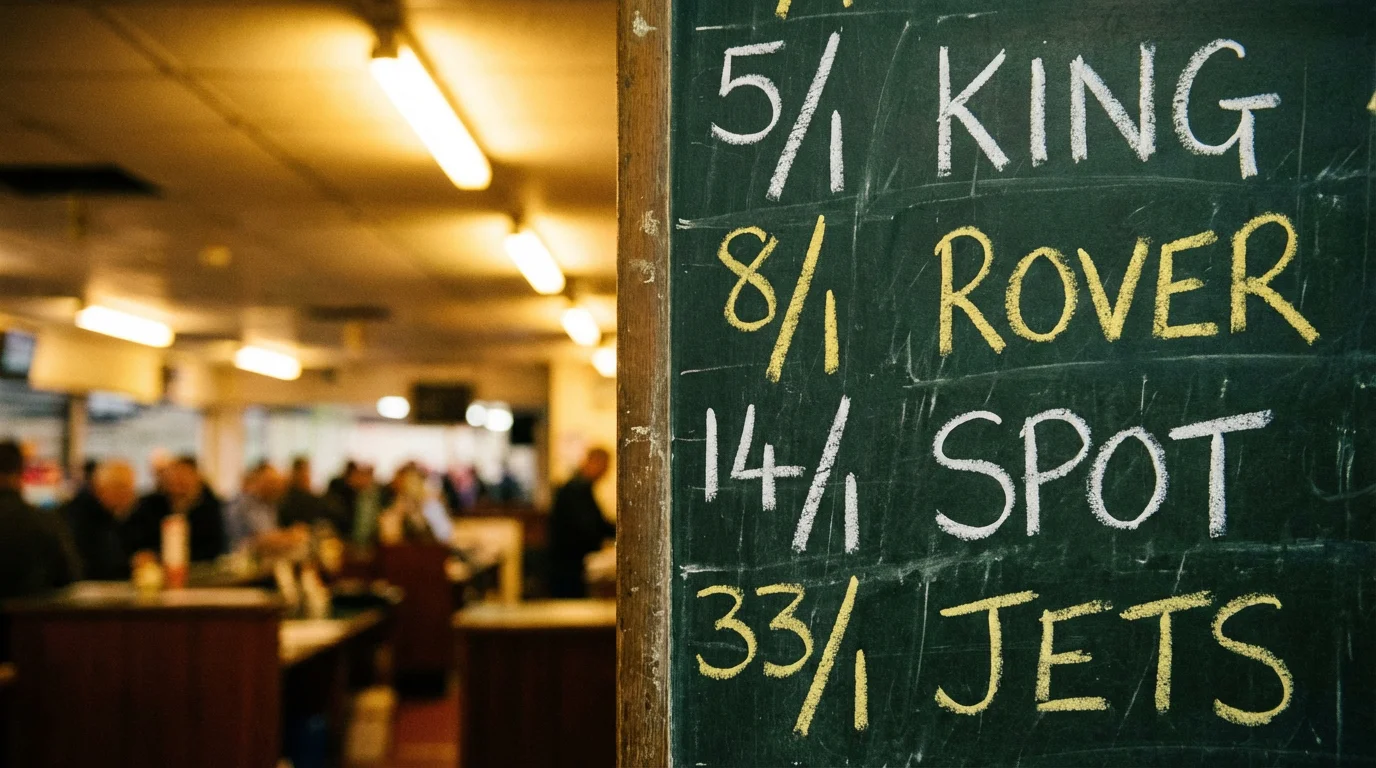
Ante-post pricing on the Greyhound Derby follows its own logic. Unlike a typical race meeting where the morning tissue is based on six known runners with recent form at that track, the Derby ante-post market opens on speculation, trial times, and trainer reputation. Early prices can reach 500/1 on dogs that haven't yet been confirmed as entries — a reflection of uncertainty, not necessarily poor quality.
The value in ante-post betting sits at the intersection of information and timing. A dog priced at 33/1 before the first round might be 8/1 by the semi-final stage if it qualifies comfortably and records strong sectional times. That price movement represents the market catching up to what informed punters already suspected. The challenge is identifying which dogs are underpriced before the evidence becomes obvious to everyone.
Historically, Derby favourites in the ante-post market have had a mixed record. The last ten finals have produced winners at SPs ranging from 11/10 to 10/1, with the 2024 winner De Lahdedah going off at 5/1. That volatility makes the ante-post market more appealing for those who do their own analysis rather than follow the crowd. Trainers with multiple entries are particularly worth watching: if a kennel has three or four dogs in the tournament, the odds are distributed across those runners, often leaving one of them underpriced relative to its genuine chance.
The critical trade-off is risk. Ante-post bets on the Derby carry a fundamental condition: if your dog doesn't make the final — or is withdrawn through injury at any stage — the stake is lost. No refund, no consolation. That rule is baked into the longer odds on offer, and any serious ante-post punter needs to accept it as the cost of entry.
How Odds Shift Round by Round
The Derby's multi-round format creates a predictable pattern of odds compression. In the weeks before Round One, the market is at its widest: dozens of dogs are priced, many without recent Towcester form, and the bookmaker's overround on the outright market is generous. As each round eliminates contenders, the surviving dogs absorb the probability of those knocked out, and their prices shorten accordingly.
A typical favourite's price trajectory might look something like this: 10/1 in the initial ante-post market, shortening to 7/1 after a strong first-round heat, then 4/1 following the quarter-finals, 5/2 after the semi-final draw, and Evens or shorter on the morning of the final. Each step represents a chunk of value being priced out. The punter who took 10/1 before the heats holds a position that's now worth significantly more — assuming the dog is still running.
Conversely, dogs that scrape through rounds — winning their heat but posting unimpressive times or encountering trouble on the bends — can drift in the outright market even as they qualify. This creates a second type of value: the battle-hardened qualifier whose price has stalled because the market hasn't been impressed. If that dog's issues were circumstantial rather than structural (a bad draw, interference in running, an unusually heavy track), the drifting price may represent genuine opportunity.
Understanding this compression cycle is essential. The Derby market doesn't sit still, and the same dog can be value at one stage and overpriced at another, depending entirely on when you enter.
Now that you understand how the market behaves, the next question is how to actually place a bet on it.
Derby odds toolkit
Read the outright market like a trader: see how much margin is built into the Derby book, what each price really implies, and which kennels hold the most winning chances. Then check what your ante-post bets are worth now – and how much to lay to lock in a profit.
Runners and prices
| Dog | Trainer / kennel | Price | Implied | Fair chance | Fair price |
|---|
Kennel strength – chance to train the winner
| Trainer / kennel | Runners | Fair chance | Fair "kennel" price |
|---|
Your ante-post bets
| Dog | Stake (£) | Price taken | Price now | Returns if wins | Worth now* | Change |
|---|
Lock in a profit
*Worth now = stake × price taken ÷ price now: the fair value of the bet at today's price, before any bookmaker margin. Fair chances remove the margin proportionally and are only meaningful when every runner in the market is entered. Ante-post stakes are normally lost if a dog fails to reach the final. 18+ only. Gamble responsibly · BeGambleAware.org · GAMSTOP
How to Bet on the Greyhound Derby
Six dogs, one trap each, and more bet types than most punters realise. The Greyhound Derby offers every standard greyhound betting market — win, place, each-way, forecast, tricast — plus the ante-post outright market that runs for weeks before the final. Each bet type carries different risk, different return potential, and different strategic logic depending on which stage of the tournament you're targeting.
Before diving into specifics, here's a quick overview of the main bet types you'll encounter on any Derby card:
Win
Back a dog to finish first. The simplest bet — your dog wins or you lose your stake.
Each-Way
Two bets in one: a win bet plus a place bet. In a six-runner Derby field, place typically pays for first or second at 1/4 the win odds.
Forecast
Predict the first two dogs home in exact order. Higher risk, higher reward.
Tricast
Predict the first three in exact order. The biggest standard payout in greyhound racing.
Outright Ante-Post
Back a dog to win the entire tournament before the final field is known. Best odds, highest risk.
Each of these markets behaves differently in a Derby context compared to a standard meeting. The six-dog field in every round keeps things contained, but the knockout structure adds a layer that ordinary race-night betting doesn't have: you're not just assessing one race, you're assessing a dog's ability to perform across multiple rounds, on the same track, over several weeks.
Win, Each-Way, Forecast and Tricast Bets
A win bet on a Derby heat is identical to any other greyhound win bet: pick the dog that crosses the line first. Odds are determined by the compiler based on form, trap draw, and market activity. In a six-runner field, a typical favourite might be priced around 6/4 to 5/2, with outsiders drifting to 8/1 or longer.
Each-way is where most Derby bettors start, and for good reason. In a six-runner field, each-way terms are normally 1/4 the win odds for the first two places. So if your dog is 8/1 and finishes second, the place portion of your bet pays at 2/1. That safety net is particularly useful in Derby heats, where the best dog in a race can be squeezed out on the first bend and finish second despite being clearly superior. The downside is cost: an each-way bet is two bets, so a £10 each-way wager costs £20 total.
For punters with stronger opinions about the finishing order, forecast and tricast bets offer significantly higher returns. A straight forecast requires you to name the first and second in exact order. A reverse forecast covers both permutations (your two dogs finishing first and second in either order) but costs twice the unit stake. Tricasts work the same way for the first three — a straight tricast is one bet, a combination tricast covers all six permutations and costs six times the unit stake.
In the Derby final specifically, where form data is abundant and the six dogs have been thoroughly assessed, forecasts and tricasts are popular because the field is small and well-analysed. That said, the hit rate on tricasts is brutal. They pay handsomely when they land, but most don't.
Placing a Derby Bet Step by Step
Placing a Derby bet online follows the same mechanical process as any greyhound wager, but the preparation should be more thorough. Open your bookmaker account, navigate to the greyhound racing section, and find the Derby market — during the tournament, it's prominently featured. For ante-post bets, look under the "Ante-Post" or "Specials" tab within greyhound racing. For individual heat bets, the standard race card will be published on the morning of each round.
Select your dog, choose your bet type (win, each-way, forecast, etc.), enter your stake, and confirm. The odds displayed at the time you place the bet are the odds you'll be paid at — unless you opt for SP. Most major UK bookmakers offer Best Odds Guaranteed on greyhound races run under BAGS and BEGS regulations, which means you'll receive the better of your taken price or the starting price. That's effectively a free upgrade, and there's no reason not to take an early price when BOG applies.
Before placing any Derby ante-post bet, run through this checklist:
Pre-Bet Checklist — Derby Ante-Post
- Confirm the dog is a registered entry for the tournament (check GBGB or track announcements)
- Review the dog's recent form, including any trial times at Towcester
- Assess the trainer's Derby record and current kennel strength
- Compare prices across at least three bookmakers for the best available odds
- Accept the ante-post terms: no refund if the dog is withdrawn or doesn't reach the final
That last point bears repeating. Ante-post stakes are dead money if the dog fails to progress, and in a tournament with 180+ starters and only six finalists, the attrition rate is extreme. Factor that into your staking — ante-post Derby bets should represent a small percentage of your overall betting bank, not a swing for the fences.
Reading Greyhound Form for the Derby
The race card tells you what happened — the form guide tells you what it means. In greyhound racing, form analysis is less complex than in horse racing (no jockeys, no going descriptions, no tactics mid-race), but the margins between dogs are tighter, and the variables that do exist — trap position, early pace, bend running, track surface — carry disproportionate weight. In the Derby context, you're also assessing whether a dog can reproduce its form over multiple rounds on the same track, which adds a durability dimension that doesn't apply to one-off meetings.
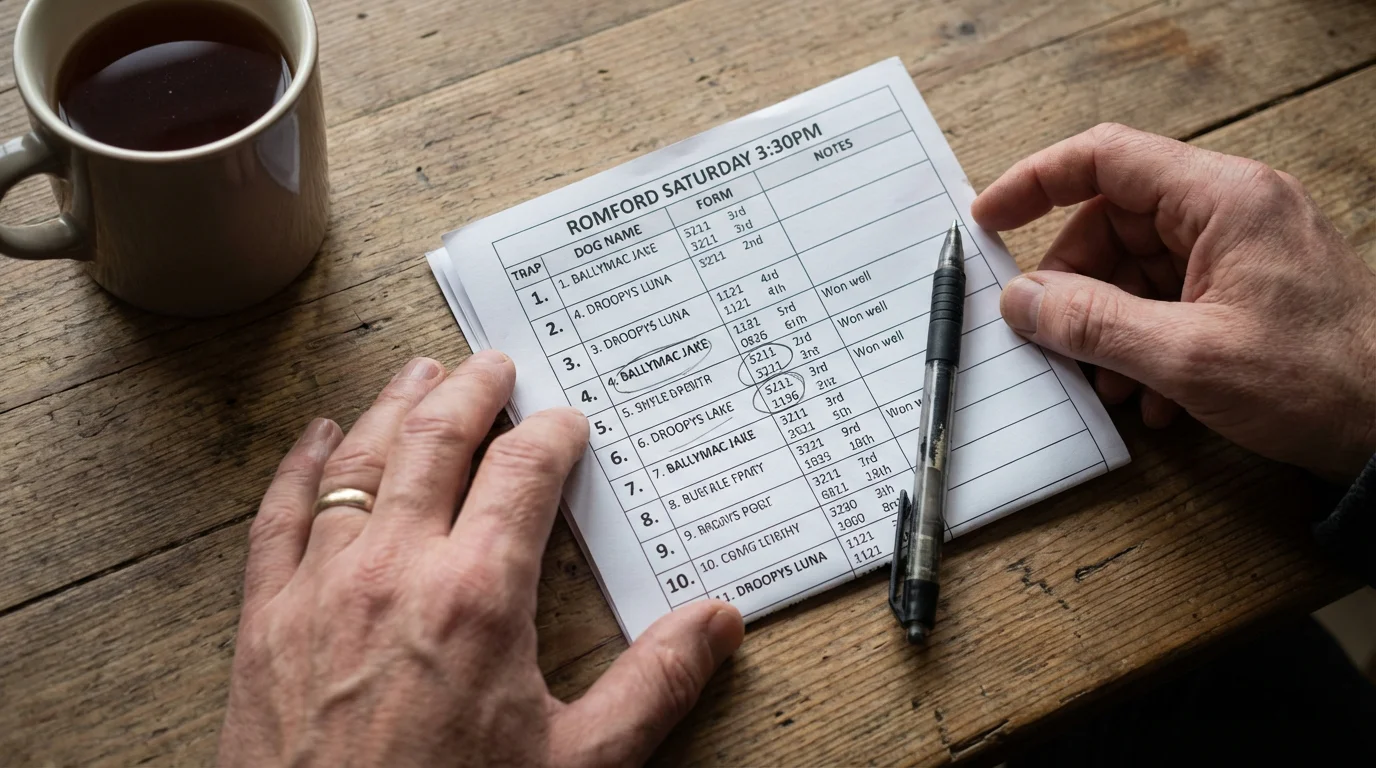
The starting point is the race card, published before each meeting. It contains every data point you need: the dog's name, trap number, trainer, weight, recent form string, best time at the track, sectional data, and a comment summarising its last run. Most punters glance at the form string and the odds. The ones who profit read the full card.
Sectional time — the time recorded for a specific segment of a race, typically from trap to first bend (early pace) and from the final bend to the finish line (run-home time). Sectionals reveal how a dog runs, not just how fast it finishes.
Beyond the card, form analysis for the Derby requires you to consider context. A dog that posted a 28.60 at Towcester on heavy sand in January is not necessarily slower than one that clocked 28.40 in dry June conditions. Track state, weather, competition quality, and race dynamics all shape the headline numbers. Stripping those variables away to assess raw ability is what form reading is actually about.
Three elements matter most for Derby form: early pace (how quickly the dog breaks from the trap and reaches the first bend), course knowledge (whether the dog has raced at Towcester before and handled its bends), and consistency (a string of solid runs is more predictive than one brilliant performance followed by three mediocre ones). A dog that traps fast, knows the track, and delivers reliably is the profile that survives a six-round knockout.
Sectional Times and What They Reveal
The overall finishing time of a greyhound race is the number most people look at. It's also the least useful number on the card when taken in isolation. A 28.50 finish can mean a dog that broke brilliantly, led by three lengths, and eased down in the run-home — or a dog that was slowly away, got crowded on the second bend, and flew home in the final 100 metres. The sectional breakdown distinguishes between these two completely different performances.
The key sectional is the trap-to-first-bend time, often referred to as the "early pace" or "first sectional." At Towcester's 500-metre trip, this measures roughly the first 100 metres of the race. A dog clocking a first sectional of 4.10 or faster is breaking well and likely reaching the first bend in front or close to it. Anything above 4.25 suggests a slower starter that will need to find room around rivals at the bend. In the Derby, where the first bend at Towcester is notoriously tight and six dogs are competing for position, a fast first sectional is not just an advantage — it's a survival mechanism.
The run-home time measures the final segment, typically from the last bend to the finish line. This is a purer indicator of stamina and sustained speed. Dogs with strong run-home times but weak first sectionals are closers — they come from behind and rely on the pace collapsing in front of them. That style can win individual races, but it's an unreliable profile for a knockout tournament where one bad break at the bend can end the campaign entirely.
When comparing sectionals across different tracks, exercise caution. Towcester's 500-metre sand track produces different sectional ranges than Nottingham or Romford. Use sectionals to compare dogs running at the same venue under similar conditions, not to rank dogs across different tracks. If you're assessing a dog that normally runs at Harlow and is entering the Derby, look at its Towcester trial times — not its best time elsewhere.
Trap Draw and Track Bias at Towcester
Trap draw is the most underappreciated variable in greyhound betting, and at Towcester, it's amplified by the track's configuration. The 500-metre course features a long run to the first bend, which in theory gives every dog time to find its stride. In practice, the bend geometry means that dogs drawn inside (Traps 1 and 2) need to hold their line cleanly to avoid being pushed wide, while dogs drawn outside (Traps 5 and 6) have more room to manoeuvre but cover slightly more ground if they drift.
Across all GBGB tracks, the inside traps (1 and 2) tend to produce marginally more winners in standard graded races because the shortest path around the bends lies along the rail. However, Towcester's first and third bends are tighter than average, and dogs racing from Traps 1 and 2 that don't break sharply can get squeezed into the rail by faster-starting middle-trap dogs. That dynamic creates a slight bias toward Traps 3 and 4 at Towcester, particularly in open-class races where the dogs are quick enough to exploit inside-trap hesitation.
Inside Traps (1–3)
- Shorter racing line on bends
- Vulnerable to crowding if slow to break
- Suits railers with sharp early pace
- First bend at Towcester punishes slow starters on the inside
Outside Traps (4–6)
- More room to find a run at the first bend
- Covers extra ground on every turn
- Suits dogs that run wide and strong through bends
- Third bend at Towcester can push wide runners even wider
In the Derby, trap draws are made after each round, so a dog that benefited from Trap 3 in the heats might be drawn in Trap 6 for the semi-final. That randomness is part of what makes the tournament unpredictable, and it's why backing a dog purely on early-round performance — without considering how it handles different draw positions — is a mistake. Look for dogs that have won or performed well from multiple trap positions. Versatility in the draw is a sign of genuine class, not just positional luck.
Betting Strategies That Work for the Derby
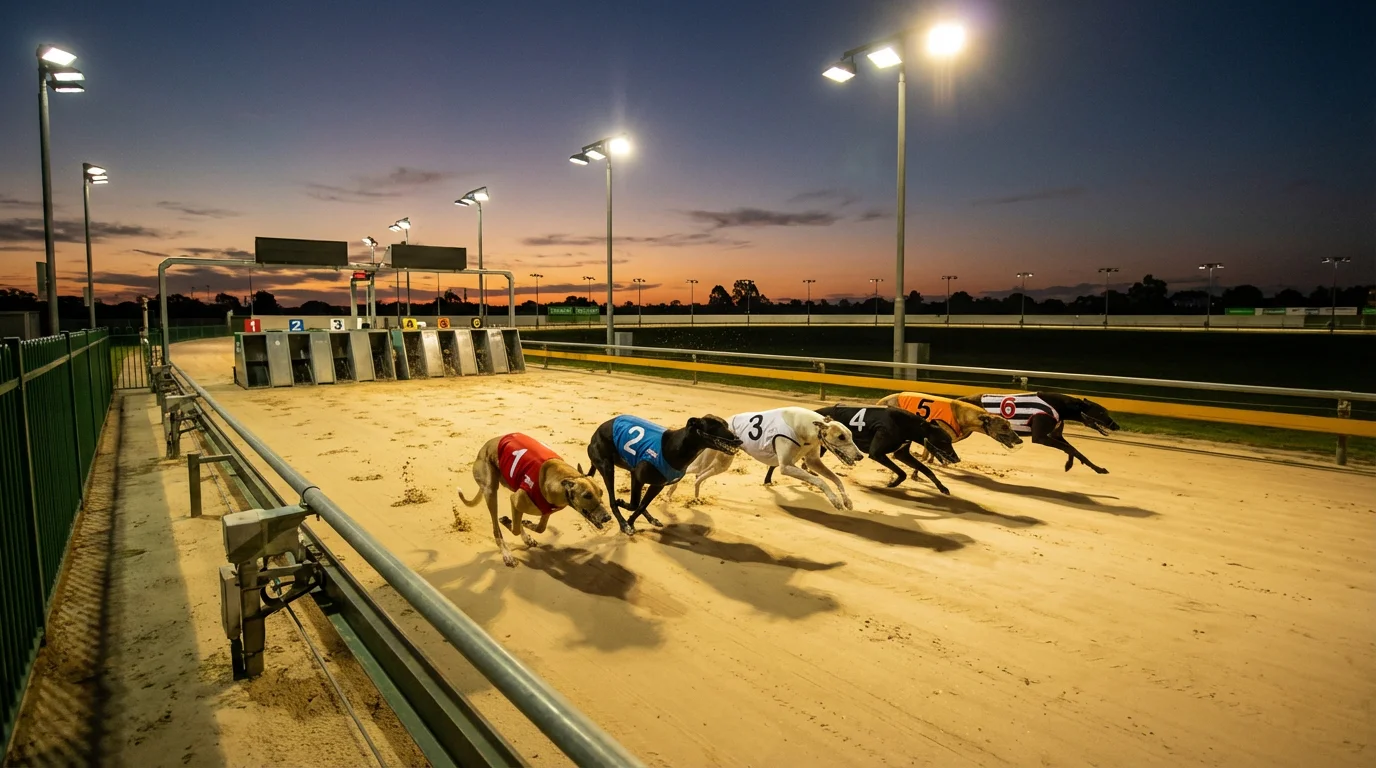
Backing the favourite in the Derby final has been a losing proposition for over a decade. That's not an opinion — it's what the data says. Since 1985, staking £1 on every Derby final favourite at SP would have returned a net loss, and the rate has worsened recently: only two market leaders have won the final in the past sixteen years. The most recent favourite to be beaten was Bockos Diamond, who finished second in the 2025 final at 11/10.
Only two favourites have won the Greyhound Derby final in the last sixteen years. The favourite's strike rate in the final is significantly worse than in standard graded racing.
This isn't because bookmakers consistently overprice the top dog. It's because the Derby final is structurally hostile to favouritism. Six rounds of elimination introduce compounding variance — random trap draws, bend interference, track condition shifts, minor injuries that aren't publicly disclosed. By the time the final comes around, the surviving dogs have navigated so many variables that the one perceived as "best" often faces a field of battle-tested opponents, any of whom is capable of winning on the night. The margin between first and sixth in a Derby final is routinely less than two lengths.
A profitable Derby strategy starts from a different premise: instead of trying to pick the winner, focus on identifying mispriced dogs at each stage. The question isn't "who wins the Derby?" — it's "which dogs are available at odds longer than their true chance justifies?"
Finding Ante-Post Value Before Round One
The ante-post market before Round One is where the most significant value exists, but it's also where the risk is highest. At this stage, you're operating with incomplete information: trial times may be limited, the final entry list may not be confirmed, and some dogs will have no Towcester form at all. The compensation for that uncertainty comes in the form of longer odds.
Three factors reliably correlate with Derby success at the ante-post stage. First, trainer pedigree: kennels with a history of Derby involvement (Graham Holland, Liam Dowling, Patrick Janssens) consistently produce runners that reach the later rounds. A trainer with three or four entries gives you multiple shots at a price — and if one of those dogs is priced at 33/1 while a kennel mate is 8/1, the market may be undervaluing the second string. Second, trial performance at Towcester: dogs that have already trialled at the track and posted competitive sectionals are discounting the course-knowledge variable that knocks out many first-timers. Third, grading class: the Derby is open to the highest tier of UK and Irish greyhounds. Dogs competing in A1 or open races in the months before the Derby are at the right level; dogs stepping up from A4 or A5 are almost always out of their depth.
The discipline required is patience. You're backing a dog to win the tournament, not to win Tuesday's heat. If the dog qualifies but doesn't impress, the price may hold or even drift, giving you an opportunity to add to your position at better terms. If it wins spectacularly, you already hold the value. The worst response to a strong first-round performance by your selection is to pile more money on at a shorter price — that's the market repricing what you already identified.
Round-by-Round Betting Approach
Not every round of the Derby demands the same betting approach. The opening heats are large-field eliminators where the priority is survival, not style. Heat winners progress automatically, and the fastest losers may also advance. At this stage, you're watching for dogs that handle the track well and break cleanly from the traps — not necessarily those that post the fastest time overall. A dog that wins its heat by two lengths from Trap 5, having been slowly away, might be more impressive than one that led all the way from Trap 1 against weaker opposition.
The middle rounds (Two through Four) are where the field hardens and form begins to crystallise. This is the stage to reassess your ante-post positions. If your dog is progressing comfortably, the price will have shortened, and you can choose to hold or lay some off for a guaranteed return. If your dog is struggling, the market will drift, and you need to decide whether the issues are fixable (bad draw, interference) or structural (lacking pace, fading in the run-home).
The semi-finals and final present a different proposition entirely. At this point, the field is small enough — six dogs per semi-final heat, six in the final — that individual-race betting becomes viable. Win bets, each-way plays, and forecasts on specific heats offer sharp opportunities because the form data is now extensive: every surviving dog has multiple Towcester runs to analyse.
Do
- Take ante-post prices on proven trainers before Round One
- Track trial times and early-round sectionals carefully
- Reassess positions after every round — the market moves fast
- Use each-way in the semi-finals when the field is open
Don't
- Chase the final favourite at a short price — the strike rate doesn't justify it
- Increase stakes to recover losses from eliminated ante-post bets
- Ignore trap draw changes between rounds
- Treat the Derby final like a single race — it's the conclusion of a tournament
Derby Structure — From 180 Dogs to a Six-Dog Final
Over 180 entries. Six qualifying rounds. One winner. The English Greyhound Derby's tournament structure is what makes it unique in British dog racing — and it's what drives the ante-post market that no other greyhound event can match. Understanding how the field is reduced from 180-plus to a six-dog final is essential for any punter looking to bet on the event at any stage.
The tournament runs across approximately six weeks, typically from late April through to early June. Each round consists of multiple heats run over the same 500-metre trip at Towcester. Winners of each heat progress automatically. In most rounds, the fastest second-placed dogs (known as "fastest losers") also advance to fill the remaining places in the next round's draw. The exact number of heats and qualification spots varies by round, depending on the entry size, but the principle is constant: win your heat and you're safe; finish second and you're relying on the clock.
For bettors, the structure creates a rhythm. Each round produces a new set of data — sectionals, trap performances, course records — and the ante-post market adjusts within hours. The tournament isn't just a series of races; it's a progressively sharpening filter that narrows the field to its strongest components.
How the Qualifying Heats Work
Round One typically features the largest number of heats — often 30 or more — with six dogs in each. The first round is the only stage where many of the 180-plus entries race. A significant number are eliminated here, particularly dogs without Towcester experience or those drawn awkwardly against stronger opposition. Heat winners advance, and a defined number of fastest losers join them in Round Two.
From Round Two onward, the field tightens. Each subsequent round has fewer heats, and the quality of opposition increases with every cut. By Round Four, the survivors are exclusively open-class dogs with proven form at the track. The seeding for each round is determined by a fresh trap draw, made after the previous round's results are confirmed. That redraw is significant: a dog that had an ideal inside trap in Round One might face an outside draw in Round Two, and its market price will adjust accordingly.
Semi-Finals and Final Night
The semi-final stage is where the Derby sharpens into a genuine spectacle. Typically, there are three or four semi-final heats, each featuring six dogs competing for the available places in the final. The exact qualification criteria can vary — in recent years, the six heat winners have progressed to the final, but in some formats the fastest runners-up are also considered.
For bettors, the semi-finals are arguably the most valuable betting round of the tournament. The field is now small enough that every dog has extensive Towcester form. You know their sectionals, their trap preferences, their running styles, and how they handle bend pressure. The ante-post outright market narrows to a dozen or so serious contenders, and the individual heat markets for the semi-finals offer concentrated value. A dog drawn well in a favourable heat can be genuinely underpriced by a market that's focused on the headline names.
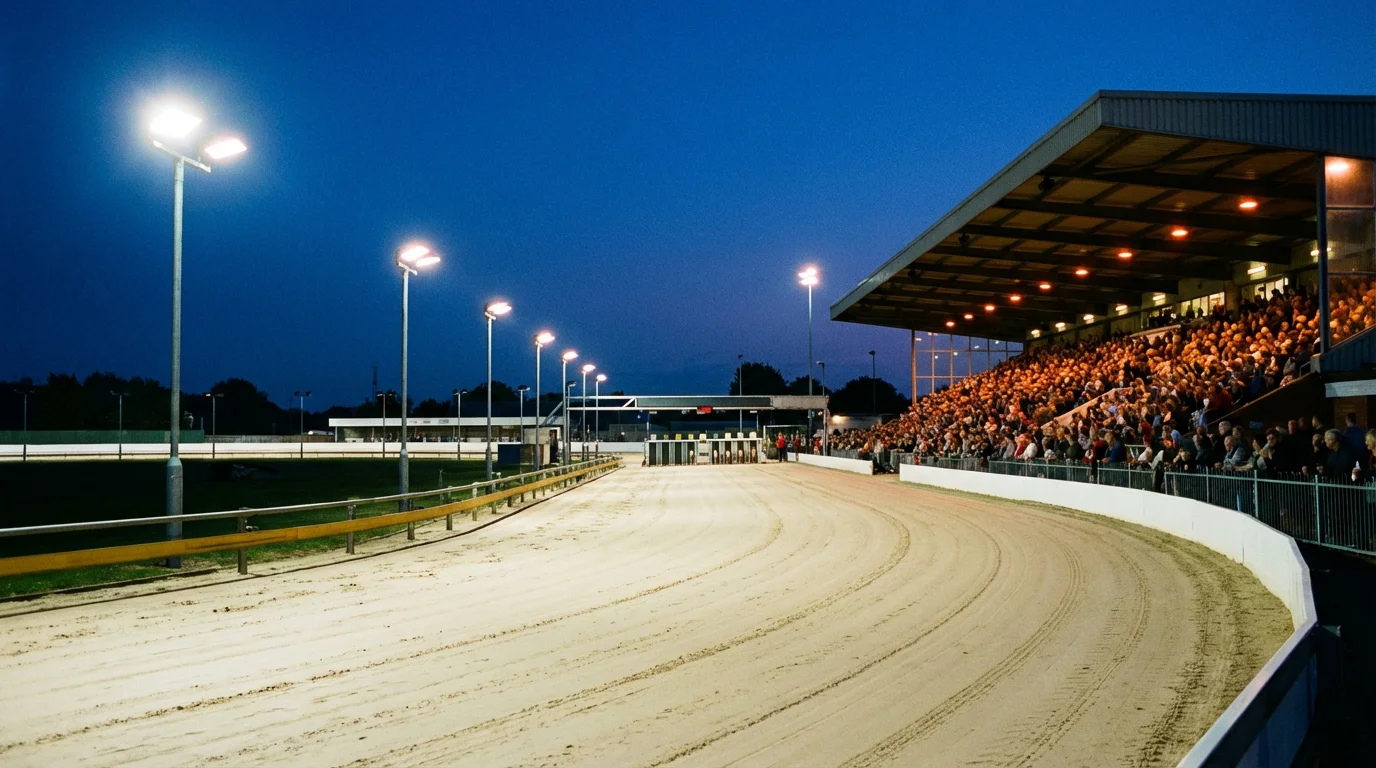
Final night at Towcester is an event in itself. The Derby final is the centrepiece, but the supporting card typically includes the Derby Plate (for dogs eliminated in the later rounds), stayers' events, and puppy races. The atmosphere is closer to a festival than a regular meeting, and the betting activity reflects that — turnover on the Derby final consistently outstrips any other single greyhound race in the UK calendar. Six dogs, 500 metres, roughly 30 seconds of racing. And behind it, nearly a century of history that gives those 30 seconds their weight.
A Brief History of the English Greyhound Derby
Since 1927, the Derby has survived venue closures, world wars, and the broader decline of British greyhound racing — and emerged each time as the sport's defining event. The first running took place at White City Stadium in London, where Entry Badge won at odds of 1/4, a price that remains the shortest in Derby history. White City hosted the final for decades, establishing the race as the "Blue Riband" of greyhound racing, a title it still holds.
The move to Wimbledon Stadium in 1985 began what many consider the Derby's golden era. Wimbledon's 480-metre course became synonymous with the event, attracting record crowds and television audiences throughout the late 1980s and 1990s. This was the period of Charlie Lister OBE — widely regarded as the greatest greyhound trainer of all time — who won seven Derbies, a record that still stands. His dominance of the event earned him the nickname "The Derby King" and an OBE from the Queen.
Wimbledon's closure in 2017 was a seismic moment for the sport. The Derby moved to Towcester in 2017, but that venue itself ran into financial difficulties, closing temporarily and forcing the event to Nottingham for the 2019 and 2020 editions. Towcester reopened and reclaimed the Derby in 2021, and the event has stabilised there since. The transition wasn't smooth — the shift from Wimbledon's tight 480-metre track to Towcester's more expansive 500-metre sand course fundamentally changed the type of dog that thrives in the Derby. Stamina and course knowledge replaced raw 480-metre speed as the critical attributes.
The longest-priced winner in Derby history remains Astute Missile, who won at 28/1 in 2017 during the first year at Towcester — a result that underlined how unfamiliar the new venue was to the established order. More recently, the private owner Nick Savva won four Derbies including three consecutive editions from 2005 to 2007, and Irish-trained dogs have become an increasingly dominant force, with trainers like Graham Holland landing the title in 2022 and 2023. The Derby's history isn't static; it adapts to whoever is willing to prepare most thoroughly for the current incarnation of the event.
Towcester — The Track That Defines the Derby
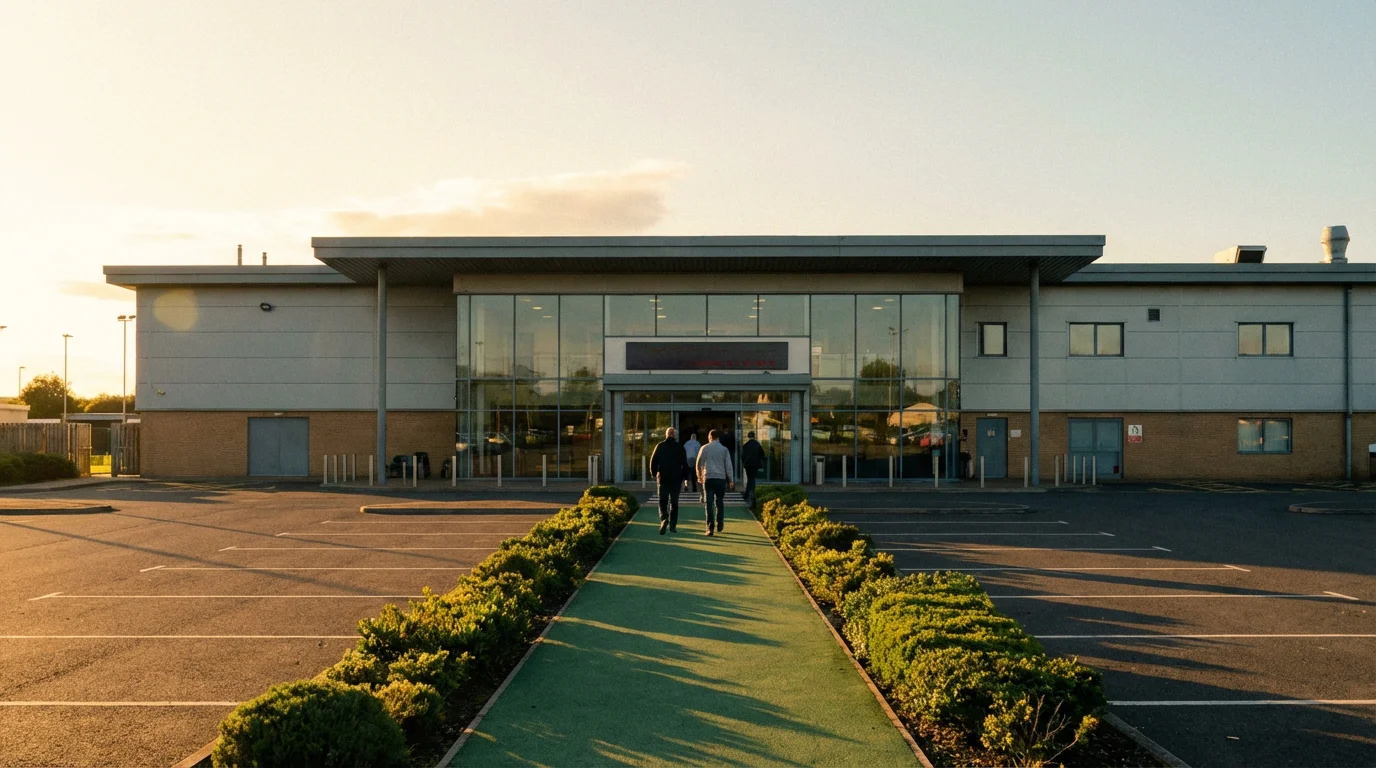
Sand surface, 500 metres, and bends that punish dogs without course knowledge. Towcester Greyhound Stadium in Northamptonshire has been the Derby's home since 2017 (excluding the Nottingham interlude), and its characteristics shape the event in ways that bettors need to understand.
The 500-metre trip begins with a long run to the first bend — roughly 100 metres from the traps to the first turn. That initial straight is longer than at many UK tracks, which gives slower-starting dogs slightly more time to recover. However, the first bend itself is relatively tight, and dogs approaching it without clean runs often get pushed wide or crowded into the rail. The third bend has a similar reputation: dogs carrying too much speed into it can lose ground to those that hold a tighter line. Course knowledge — having raced or trialled at Towcester before — is one of the strongest predictors of Derby success.
The sand surface is the other critical factor. Towcester's sand is well-maintained and provides consistent traction in dry conditions, but it becomes heavier after rainfall. Heavier sand slows overall times and disproportionately affects dogs that rely on blistering early pace rather than sustained stamina. A dog that breaks fast on dry sand might struggle to maintain that speed when the surface is wet and slow. Checking the weather forecast before a Derby round isn't paranoia — it's a practical adjustment that directly affects which dogs are likely to perform.
The Greyhound Board of Great Britain oversees track standards at Towcester, and the surface is groomed and watered between races to maintain consistency within a meeting. Between meetings, however, conditions can shift materially depending on weather patterns. Dogs that trialled at Towcester in March may face a very different surface in June. That gap between trial conditions and race-day conditions is yet another variable that Derby bettors need to account for — and one that the market frequently misprices.
Frequently Asked Questions
How does ante-post betting work on the Greyhound Derby?
Ante-post betting allows you to back a dog to win the Greyhound Derby before the final field is known — often months in advance. Prices are typically longer than they would be in the final because you're accepting the risk that the dog might not reach the final due to elimination, injury, or withdrawal. The critical rule is "no runner, no return": if your selected dog doesn't compete in the final for any reason, your stake is lost. Ante-post odds are available from all major UK bookmakers and are updated after each qualifying round as the field narrows.
What trap position wins the most in greyhound racing?
Across UK greyhound tracks, inside traps (particularly Traps 1 and 2) have a marginal statistical edge in standard graded races because they offer the shortest path around the bends. However, the advantage varies by track. At Towcester, where the Greyhound Derby is held, the first bend geometry means that Traps 3 and 4 can perform comparably well, especially in open-class races with fast-breaking dogs. No single trap position guarantees success — the dog's running style, early pace, and how it handles bends are more important than the number on its jacket.
What is the best strategy for betting on the Greyhound Derby?
The most effective approach combines early ante-post selections (targeting dogs from strong kennels at longer odds before Round One) with round-by-round reassessment as the tournament progresses. Focus on dogs with fast first sectionals, proven Towcester form, and trainers with a Derby pedigree. Avoid defaulting to the final favourite — the Derby final has a poor record for market leaders, with only two favourites winning in the last sixteen years. Use each-way bets in the semi-finals when the field is competitive, and keep your Derby staking to a small, defined portion of your betting bank.
The Longest Odds Are Always Before the First Heat
The Derby rewards patience, homework, and the nerve to take a price when nobody else will. That's the recurring theme across every section of this guide, and it's the single most important takeaway for anyone approaching the event with serious intent.
Most greyhound bets are placed minutes before the off, on dogs whose form you've skimmed and whose odds you've glanced at. The Derby invites a fundamentally different approach. Its weeks-long structure gives you time to build knowledge, assess trial data, track trainer patterns, and watch how individual dogs handle Towcester's bends. That time is the edge — not a system, not a tipster, not a promotional free bet.
The 2026 Derby field is taking shape. Trainers across the UK and Ireland are preparing their strongest dogs for the opening heats. The ante-post market is already pricing up contenders, and the dogs that will reach the final in early June are likely already in active training. The longest odds are available now, before any form evidence exists to shorten them. Whether you act on that or wait for the market to do the work for you is, ultimately, the first strategic decision of your Derby campaign.
Do the work. Take the price. Back your judgement.
