

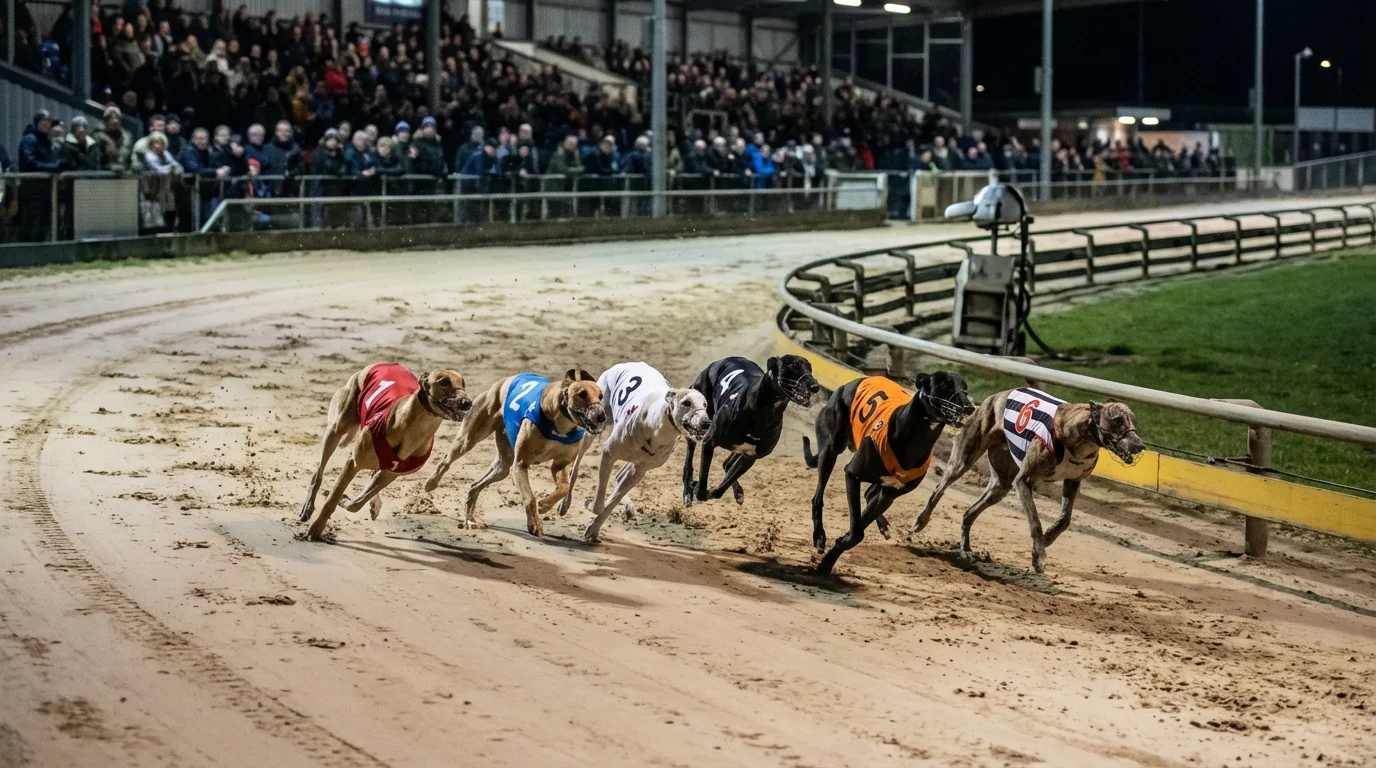
The Semi-Finals Are Where the Derby Is Really Won
Get through the semis and you’re one race from the richest prize in UK dog racing. The Greyhound Derby semi-finals represent the sharpest inflection point in the entire competition. Before the semis, the field is still broad enough that moderate dogs can survive through kind draws and weak heats. After the semis, only six remain — and the quality of those six is determined entirely by what happens on semi-final night. Find more Derby guides at greyhoundderbyodds.
For bettors, the semi-finals offer something unique in the Derby calendar: the combination of deep form data from four or five previous rounds at Towcester, a compressed and high-quality field, and betting markets that are more active and more liquid than any round before the final. The semi-final card is where your accumulated knowledge of the competition pays its largest dividend, and where the betting opportunities are most clearly defined.
How the Semi-Finals Work
The semi-final round typically comprises two heats of six dogs, with the winner of each heat qualifying automatically for the final. The remaining four final places are then filled by the fastest losers across both semi-finals — the dogs with the best finishing times among those that didn’t win their respective heat. The exact qualification criteria can vary slightly by year, but the core structure is consistent: win your semi and you’re guaranteed a place in the final; finish second or third and your fate depends on the clock.
This format creates distinct tactical dynamics. In a semi-final where one dog is significantly superior, the real contest is for the minor positions — the dogs fighting to post a time fast enough to qualify as a fastest loser. A dog that finishes second in a fast semi-final may qualify comfortably, while a dog that finishes second in a slow semi might miss out entirely. The overall pace of each semi-final matters as much as the individual finishing positions.
The trap draw for the semi-finals is made after the previous round’s results, following the same random process used throughout the competition. A dog that has benefited from inside traps throughout the heats might suddenly find itself drawn in Trap 5 or 6 for the semi — a draw that fundamentally changes its chances and the betting market’s assessment of those chances.
The semi-final card is typically run on a single evening at Towcester, with both heats on the same programme. This concentrated format means the results of one semi can influence your approach to the other — if the first semi produces a fast time, you know the surface is running quick, which affects your expectations for the second heat. Bettors watching live have a real-time information advantage over those who placed their bets before the card began.
Semi-Final Betting Markets
The semi-final card offers more markets than any other Derby round. Bookmakers price each semi-final as a standalone six-dog race, with win, each-way, forecast, and tricast markets available. Additionally, outright Derby winner markets are refreshed and repriced after each round, and the semi-final stage is where the ante-post market narrows from a dozen or more contenders to the twelve dogs still alive in the competition.
The win market on each semi-final is the primary betting opportunity. By this stage of the competition, every surviving dog has four or five runs at Towcester in its form line, giving punters a substantial body of venue-specific data. The market reflects this — prices are generally sharper than in the early rounds, because the form data is richer and the bookmakers have more information to compile accurate tissues. Finding value in the semi-final win market requires a finer edge than in the heats, but the edge is more reliably identifiable because the data is more robust.
Each-way markets in the semi-finals carry a specific dynamic. With only six runners and typically two places paid, the each-way terms are standard — but the fastest-loser qualification rule adds a secondary incentive to place betting. A dog that you rate to finish second but in a fast-run semi has a strong chance of qualifying for the final even without winning, which makes the place portion of an each-way bet more valuable than in a standard race where second place is simply second place.
The outright Derby winner market, refreshed after the semi-final draw, offers ante-post value for the final. Prices at this stage reflect the twelve remaining dogs, their semi-final draws, and the market’s pre-semi assessment. After the semi-finals are run, the market contracts to six finalists and the prices tighten significantly. Taking an outright winner price before the semis — on a dog you expect to qualify — locks in a longer price than you’ll get after qualification is confirmed.
Betting Angles for the Semi-Finals
Course form, trap draw, and heat composition all change the picture. The semi-finals reward analytical depth more than any other round because the variables are concentrated and the data is deep.
Course form is at its most valuable in the semis. Every dog in the semi-final has run at Towcester multiple times in the preceding weeks. You can assess how each dog handles the track’s specific bends, how its sectional times have progressed through the competition, and whether it’s improving, plateauing, or declining. A dog whose trap-to-first-bend time has quickened in each successive round is peaking at the right moment. A dog whose run-home time has slowed may be feeling the physical toll of the campaign.
The trap draw’s impact is amplified in the semi-finals because the quality gap between the six runners is narrower than in the heats. In a first-round heat, a clearly superior dog can overcome a poor draw through sheer ability. In a semi-final, where every dog is a proven performer, the draw can be the decisive factor. A dog that’s run well from inside traps throughout the competition but draws Trap 6 in the semi faces a genuine challenge that its form figures alone don’t account for.
Heat composition — who runs against whom — shapes the tactical dynamics of each semi. If two front-runners are drawn in the same semi, they’ll compete for the lead and potentially burn each other out, opening the door for a mid-pack closer. If one semi contains the three most fancied dogs in the competition, that heat becomes a high-quality race where the fastest-loser times are likely to be quick — benefiting the minor placings. Analysing the semi-final draw as a whole, rather than dog by dog, reveals these compositional effects.
Using Semi-Final Performances to Preview the Final
The semi-final times and running styles tell you who’ll be dangerous in the final. The semi-finals are a dress rehearsal for the main event — the same track, the same distance, the same level of competition, just one week before the final. Every piece of data from the semis transfers directly to the final assessment.
Winning time is the headline figure. The dog that posts the fastest semi-final time — regardless of which heat it ran in — has demonstrated the highest current level of performance at the venue. But raw time needs context: was the surface fast or slow across the card? Did the dog have a clear run or fight through traffic? The semi-final race replay, combined with the sectional data, tells you more than the finishing time alone.
Running style matters more in the final preview than at any earlier stage. A dog that leads from Trap 1 in the semi-final looks impressive, but if it draws Trap 5 in the final, that front-running style faces a completely different challenge. Conversely, a dog that closes from mid-pack in the semi and still qualifies has shown the ability to make ground through traffic — a skill that’s often more durable across different draw positions than pure early pace.
Physical condition is the hidden variable. Watch the semi-final replays closely. A dog that finishes its semi-final strongly — maintaining pace through the final hundred metres — is more likely to reproduce that form in the final than one that tied up in the closing stages. Fatigue accumulates across a six-week competition, and the semi-final is the last window to assess each dog’s physical state before the race that matters most.
Win the Semi-Final Market, Set Up the Final
The semis are the sharpest betting opportunity on the entire Derby card. The form data is at its deepest, the field quality is at its highest, and the markets are liquid enough to offer real pricing. Every round before the semis is building toward this point — accumulating the information that makes your semi-final assessment possible. Every bet after the semis is informed by what happens on semi-final night. Also read our greyhound Derby rounds explained.
Approach the semi-finals with your full analytical toolkit and your clearest thinking. The dogs are known. The track is known. The variables — draw, composition, surface — are knowable. What remains is the judgment call: which dog’s profile fits the semi-final conditions best, and does the price offer value? Answer that question correctly, and you’ve not only found a profitable bet — you’ve built the foundation for your final-night position.
