Best Greyhound Betting Sites – Bet on Greyhounds in 2026
Loading...
Trainers Win Races — Not Just Dogs
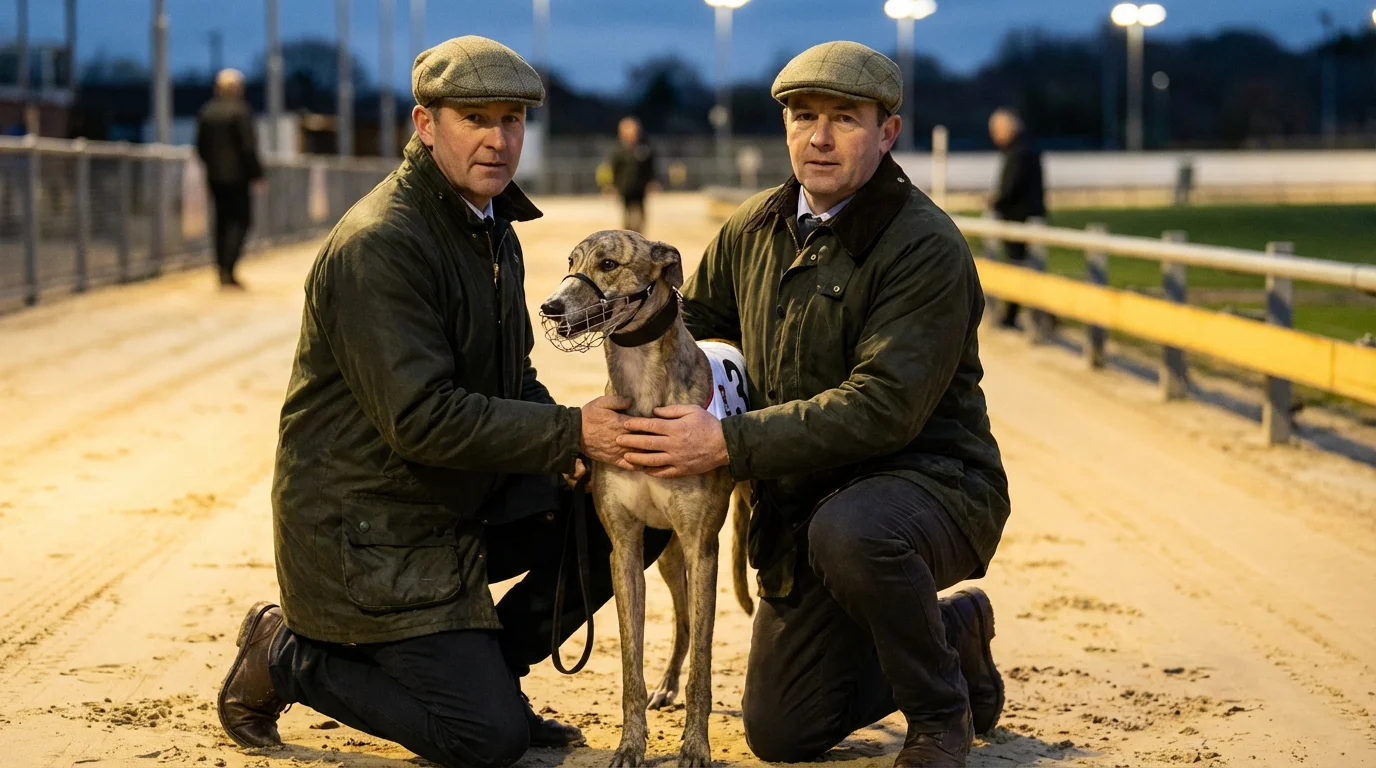
A strong kennel can produce multiple contenders from a single litter. In greyhound racing, the trainer’s role extends far beyond race-day preparation. Trainers breed, rear, condition, trial, and campaign their dogs — managing every aspect of the animal’s career from puppy trials through to open-class competition. The quality of that management determines whether a naturally talented greyhound reaches its potential or falls short, which is why trainer form is one of the most persistent and reliable signals in greyhound betting.
In horse racing, the jockey’s skill and the trainer’s strategy both shape the outcome. In greyhound racing, there is no jockey. The dog runs its own race. The trainer’s influence is entirely in the preparation: fitness, weight management, track selection, trial timing, and the ability to bring a dog to peak condition for the right race at the right moment. For the Derby, that ability is tested over six weeks of competition — a campaign that rewards trainers who understand periodisation, recovery, and the cumulative demands of weekly racing at the highest level.
The Leading UK and Irish Greyhound Trainers
From Liam Dowling to Graham Holland, the names that dominate the sport are familiar to anyone who follows the Derby circuit. The top tier of trainers in UK and Irish greyhound racing is relatively small — a dozen or so kennels that consistently produce open-class dogs and compete at major events. Understanding who they are and how they operate is a core part of Derby betting.
Graham Holland, based in Golden, County Tipperary (Riverside Kennels), has been one of the most prominent Derby trainers in the modern era. His kennel produces a steady stream of high-quality dogs that compete across British and Irish competitions, and his record of reaching the Derby semi-finals and final with multiple runners gives punters a broad portfolio of options in the ante-post market. Holland’s dogs tend to be well-trialled at the competition venue before the event begins, which means his runners typically have the course familiarity advantage that Towcester rewards.
Liam Dowling, also based in Ireland, has trained several notable Derby winners and contenders. His kennel operates on a similar model — breeding and developing dogs specifically for the major competitions rather than focusing on graded racing. Dowling’s runners often arrive at the Derby with strong trial form and the fitness profile of dogs aimed specifically at a six-round campaign.
Patrick Janssens represents a distinctive approach. Belgian-born but based in England at his kennels in Thetford, Norfolk (GBGB), Janssens has trained Derby winners and is known for a meticulous preparation style that prioritises physical condition and track-specific readiness. His entries are always worth monitoring in the ante-post market because the kennel’s reputation ensures that any Janssens runner in the Derby has been specifically prepared for the competition.
Among UK-based trainers, Charlie Lister’s legacy remains the benchmark. Although retired from the peak of his training career, Lister’s seven Derby wins established him as the most successful trainer in the event’s history (GBGB). His methods — building race fitness through a carefully managed campaign rather than asking for maximum effort in every round — influenced how subsequent trainers approach the Derby. The current generation of UK trainers, including names like Kevin Hutton, Mark Wallis, and others competing at the open-race level, operate in Lister’s shadow to varying degrees.
Trainer Records in the Greyhound Derby
Charlie Lister’s seven wins set a standard that may never be matched. His dominance between 1997 and 2013 was unprecedented (Coral) — no other trainer has won the Derby more than three times, and most of the sport’s leading trainers consider a single Derby win a career-defining achievement. Lister’s record is the outlier, but it demonstrates a principle that applies to every trainer: Derby success is not random, and the trainers who win once tend to contend again.
The data shows that a small group of trainers accounts for a disproportionate share of Derby finals appearances. In any given year, the six finalists typically include dogs from three or four kennels, with at least one trainer having two runners in the final. This concentration reflects both the quality advantage of top kennels and the strategic benefit of entering multiple dogs — more entries mean more chances to reach the final, more data from the heats, and more flexibility in how the campaign is managed across different dogs.
For ante-post betting, trainer records are a primary filter. A trainer who has placed a dog in the Derby final in three of the last five years has demonstrated the ability to manage the campaign successfully — not just the talent to produce fast dogs. That campaign management skill is the differentiator at the highest level, where raw ability is roughly equal across the leading contenders. The trainers who consistently reach the final do so because they understand how to bring a dog through six weeks of competition in peak condition.
How to Track Trainer Form for Betting
Trainer strike rates at specific tracks and in specific grades are public data. Every result from every GBGB meeting is published, and the trainer’s name appears alongside each runner. Aggregating those results over time — by track, by grade, by distance — produces a trainer form profile that’s directly applicable to betting.
The most relevant metric for Derby betting is trainer performance at Towcester. A trainer who runs dogs at Towcester regularly, and wins at a rate above the track average, is demonstrating both a preference for the venue and an ability to prepare dogs specifically for its demands. Trainers who rarely run at Towcester but enter dogs for the Derby are asking their runners to adapt to an unfamiliar track during a high-pressure competition — a handicap that the data says costs them results.
Seasonal form matters too. Trainers go through hot and cold streaks, just as individual dogs do. A kennel that has produced a run of winners across multiple tracks in the weeks before the Derby is operating at a high level — the dogs are fit, the preparation is working, and the trainer’s eye for placing dogs in the right races is sharp. Conversely, a kennel that has gone quiet in the lead-up to the Derby may be saving its best dogs for the main event, or it may be struggling with form issues that will carry into the competition.
Track these patterns through published results or through the various form databases available online. Most serious greyhound form services allow you to filter results by trainer, track, and date range. Building a trainer form profile doesn’t take long, and the insight it provides — particularly in the ante-post phase when you’re assessing which kennels are likely to produce the strongest Derby runners — is among the most valuable in your analytical toolkit.
Kennel Strength vs Individual Dog Talent
A trainer with three semi-finalists has a structural advantage. This is the point where kennel analysis diverges from individual dog assessment, and it’s a distinction that many punters miss. Backing an individual dog is a bet on one animal’s performance in one race. Backing a kennel — spreading small stakes across two or three of a trainer’s Derby entries — is a bet on the trainer’s system producing at least one dog that reaches the final.
The arithmetic supports the kennel approach. If a leading trainer enters five dogs in the Derby and each has a roughly 10% chance of winning, the kennel’s combined win probability is around 40%. No individual dog justifies a heavy stake at those odds, but the portfolio of entries, backed at their individual ante-post prices, represents a strong aggregate position. This is how professional punters approach the Derby’s ante-post market — they buy into systems, not individuals.
Individual talent still matters within the kennel. The trainer knows which dog is the primary Derby hope and which are secondary entries. Trial times, race programme choices, and public comments can sometimes reveal the kennel hierarchy. When a trainer runs three dogs at Towcester in March and only one of them runs a full trial over 500 metres, that’s a signal about which dog the preparation is focused on. Combining kennel-level investment with individual-level analysis gives you the sharpest picture of the trainer’s intentions and the dog’s chances.
Follow the Kennel, Not Just the Dog
Trainer form is the most persistent signal in greyhound racing. Dogs come and go — their careers at the top level last two or three seasons at most. Trainers persist for decades, and their patterns of success are remarkably stable over time. A trainer who consistently produces Derby contenders in 2023, 2024, and 2025 is likely to do so again in 2026. The individual dogs change, but the system that produces them doesn’t.
When you assess the Derby field, start with the trainers. Identify which kennels have the strongest records, the most entries, and the best recent form at Towcester. Then narrow your focus to the individual dogs within those kennels that fit the Derby winner profile — strong early pace, efficient bending, proven stamina over 500 metres. The dog is the instrument. The trainer is the hand that tunes it. Bet accordingly.