Bookmakers Compete Hardest When the Derby Runs
The Derby brings out the best promotions of the greyhound racing calendar. For six weeks each year, the English Greyhound Derby generates more betting interest than any other event in the sport, and bookmakers respond by rolling out their most aggressive promotional offers. Free bets, enhanced odds, money-back specials, and extra place terms all appear during the Derby period — incentives designed to attract new customers and increase engagement from existing ones. Find more bonus guides at greyhoundderbyodds.
For punters, these promotions represent genuine additional value — but only if you understand how they work and what restrictions apply. A free bet that looks like ten pounds of risk-free money might come with wagering requirements that make the effective value closer to four or five pounds. An enhanced odds offer at 20/1 instead of 10/1 might be capped at a one-pound maximum stake. The headline always looks generous. The terms are where the reality lives.
Types of Betting Offers Available for the Derby
Free bets, enhanced odds, money-back specials, and accumulator bonuses are the four main categories of promotions you’ll encounter during the Derby season. Each operates differently and suits different betting approaches.
Free bets are the most common. A bookmaker gives you a bet token — typically between five and twenty pounds — that you can place on a Derby race. If the bet wins, you receive the profit but not the original stake. A ten-pound free bet at 5/1 returns fifty pounds, not sixty. Free bets are effectively a discounted entry into a bet rather than a genuinely free one, but the value is still real — you’re getting fifty pounds of profit from a position that cost you nothing to enter.
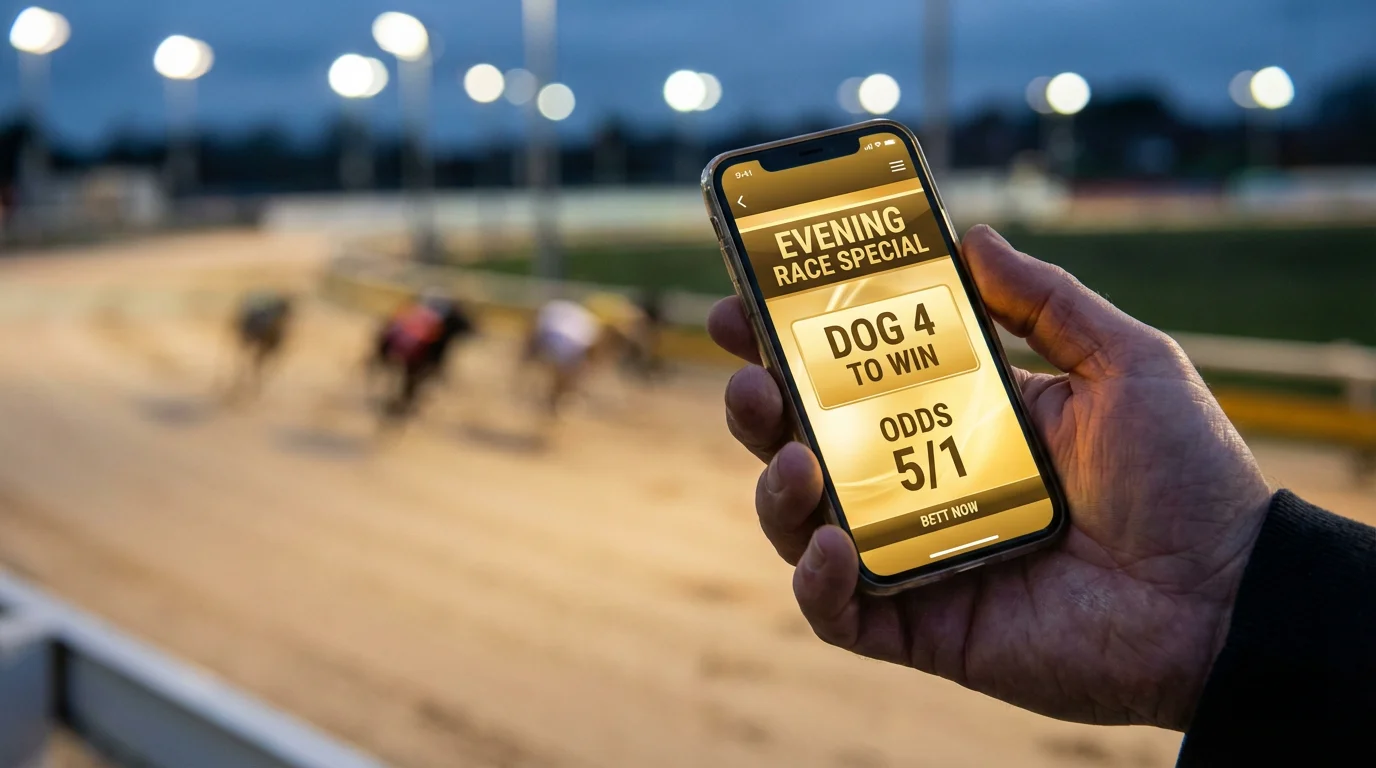
Enhanced odds offers temporarily inflate the price on a specific selection. A bookmaker might offer the Derby favourite at 20/1 instead of 3/1, but with a maximum stake of one or two pounds and the winnings paid as free bet tokens rather than cash. These offers are eye-catching and worth taking when available, but the stake limits and payout mechanics mean the actual expected value is lower than the headline price suggests. They’re best used alongside your normal betting rather than as a replacement for it.
Money-back specials refund your stake — usually as a free bet — if a specific condition is met: your dog finishes second, or the favourite wins, or your selection leads at the first bend but doesn’t win. These are effectively insurance on a position. If the condition is relevant to your selection — say, your dog is a strong front-runner likely to lead at the first bend — the money-back offer adds value by covering a specific losing scenario. If the condition is irrelevant to your bet, the offer has no practical effect.
Accumulator bonuses add a percentage to your accumulator winnings based on the number of legs. A four-fold might attract a 10% bonus, a five-fold 20%, and so on. For Derby accumulators across multiple heats, these bonuses can add meaningful value — but they don’t change the fundamental challenge of landing an accumulator, which remains a low-probability bet regardless of any bonus percentage.
How to Use Free Bets on the Greyhound Derby
Free bets have terms. Read them before you place anything. The most important detail is whether the free bet is “stake not returned” (SNR) or “stake returned.” The vast majority of bookmaker free bets are SNR, meaning you keep only the profit if the bet wins. This affects your optimal strategy: with an SNR free bet, you should place it on a longer-priced selection where the potential profit is high relative to the free bet value, rather than on a short-priced favourite where the profit would be modest.
On a ten-pound SNR free bet, backing a 2/1 favourite returns twenty pounds profit. Backing a 10/1 outsider returns one hundred pounds profit. The free bet itself is gone in both cases — you don’t get the ten-pound token back — so the expected value is higher at longer odds. This is the opposite of how you’d normally bet with your own money, where you’d weigh probability more heavily. Free bets are a rare case where the optimal approach is to aim for the highest possible return, not the highest probability of winning.
Timing matters too. Most free bets have an expiry period, typically seven to thirty days from issue. If a free bet is issued at the start of the Derby and expires before the final, you need to use it during the heats or semi-finals. Plan accordingly — don’t hold a free bet hoping for a better opportunity in a later round if there’s a risk it expires before then.
Some free bets carry minimum odds restrictions: you can only use them on selections at 1/2 or longer, or 1/1 or longer. Check these before trying to place the bet, as selections below the minimum odds threshold will reject the free bet. For most Derby races, the majority of runners will qualify above common minimum odds thresholds, but short-priced favourites might not.
Understanding Wagering Requirements and Restrictions
Minimum odds, time limits, and excluded bet types — the small print matters. Wagering requirements define how many times you need to bet through a bonus amount before you can withdraw the funds. A common structure is “3x wagering at minimum odds of 1/2” — meaning you must place bets totalling three times the bonus value, each at odds of 1/2 or higher, before the bonus becomes withdrawable cash.
For greyhound-specific offers, the restrictions tend to be less aggressive than for sports welcome bonuses, but they still exist. Some offers exclude certain bet types — forecasts and tricasts may not count toward wagering requirements, even though they’re valid greyhound bets. Others exclude specific meetings or tracks. Always check whether the Derby meeting you’re betting on qualifies under the offer’s terms.
Time limits create urgency that can lead to poor decisions. A free bet expiring in 48 hours tempts you to use it on whatever race is available, rather than waiting for the optimal opportunity. Recognise this pressure for what it is — a design feature, not a betting signal — and place the free bet on the best available race within the time limit rather than forcing it onto a race you haven’t properly assessed.
Enhanced odds offers are particularly worth scrutinising. The headline price — “Derby favourite at 30/1!” — is invariably subject to a maximum stake, often just one or two pounds, and the winnings are frequently paid as free bet tokens rather than cash. If the winnings are paid as free bets, their actual value is roughly 50-70% of face value, because you’ll lose a portion through the SNR mechanic when you use them. A 30/1 offer with a one-pound maximum stake and winnings paid as free bets has an expected value of perhaps fifteen to twenty pounds, not thirty. Still worthwhile, but different from what the headline suggests.
What to Look For in 2026 Derby Promotions
Offers change yearly, but the patterns are predictable. Based on previous Derby seasons, expect the major bookmakers to launch promotions in three waves: the ante-post phase, the heats phase, and the final itself.
Ante-post promotions typically include enhanced odds on specific Derby entries and free bet offers for new customers who open accounts during the build-up period. These are worth capturing early, particularly the new-customer free bets — they’re one-time offers that are most valuable when used on ante-post selections at longer prices.
During the heats, money-back specials and extra place offers tend to dominate. Bookmakers might offer money back if your dog leads at the first bend, or pay three places each-way instead of two. These offers are most valuable in open, competitive heats where the each-way market is already attractive — the extra place terms amplify a position that was already sound.
For the final, expect the biggest promotional push: enhanced odds on named runners, accumulator bonuses across the final card, and money-back specials on the race itself. These offers attract the highest betting volumes of the year, and bookmakers price them accordingly — the margins are tighter, the promotions are more generous, and the total available value is at its peak. Plan your Derby betting bank to have ammunition available for the final, where the combination of sharp odds and promotional value creates the best overall conditions of the season.
Offers Are a Bonus — Not a Strategy
Use promotions to boost value. Never let them dictate your selections. The most common error with betting offers is allowing the promotion to drive the bet rather than the other way around. A free bet should be placed on a selection you’ve already assessed; it shouldn’t be the reason you assess a race you’d otherwise ignore. An enhanced odds offer is a bonus on a selection you were already considering; it shouldn’t tempt you into backing a dog you haven’t researched. Also read our what is best odds guaranteed in greyhound racing.
Treat every offer as a secondary layer. Your primary layer is your form analysis, your selection process, and your staking plan. When a promotion aligns with a bet you were already planning to make, take it — it’s free value. When a promotion pushes you toward a bet you wouldn’t otherwise make, recognise that the bookmaker’s marketing is doing its job, and yours is to resist. The Derby offers real betting value on its own merits. The promotions simply add a little more on top.
